








The Trend Is Not a Feeling. It's a Fact.
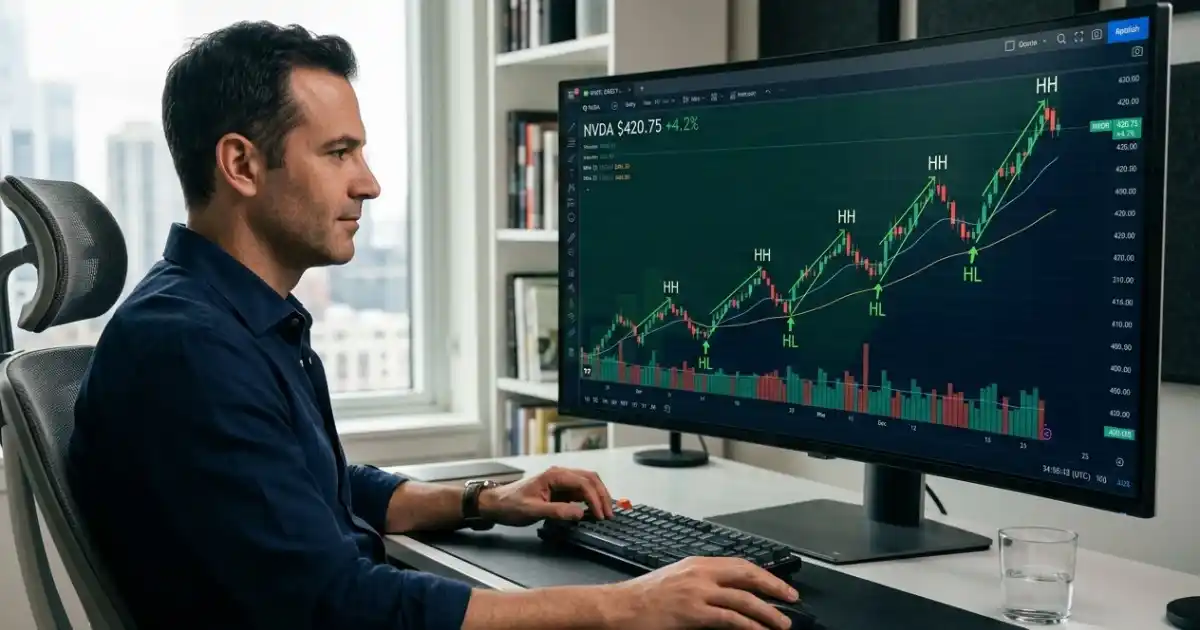
Most traders think they know what a trend is. Most are wrong. A trend isn't a stock that moved up today or a sector in the news. It's a series of higher highs and higher lows in an uptrend or lower highs and lower lows in a downtrend. Directional momentum confirmed by price action over time.
When a trend is established, institutions are positioned in it and capital is flowing in one direction. A swing trader who identifies that direction early isn't guessing they're aligning with the most powerful force in the market. Most retail traders never find that alignment because they're too focused on individual setups to see the bigger picture.
How to Spot a Trend Before You Trade It
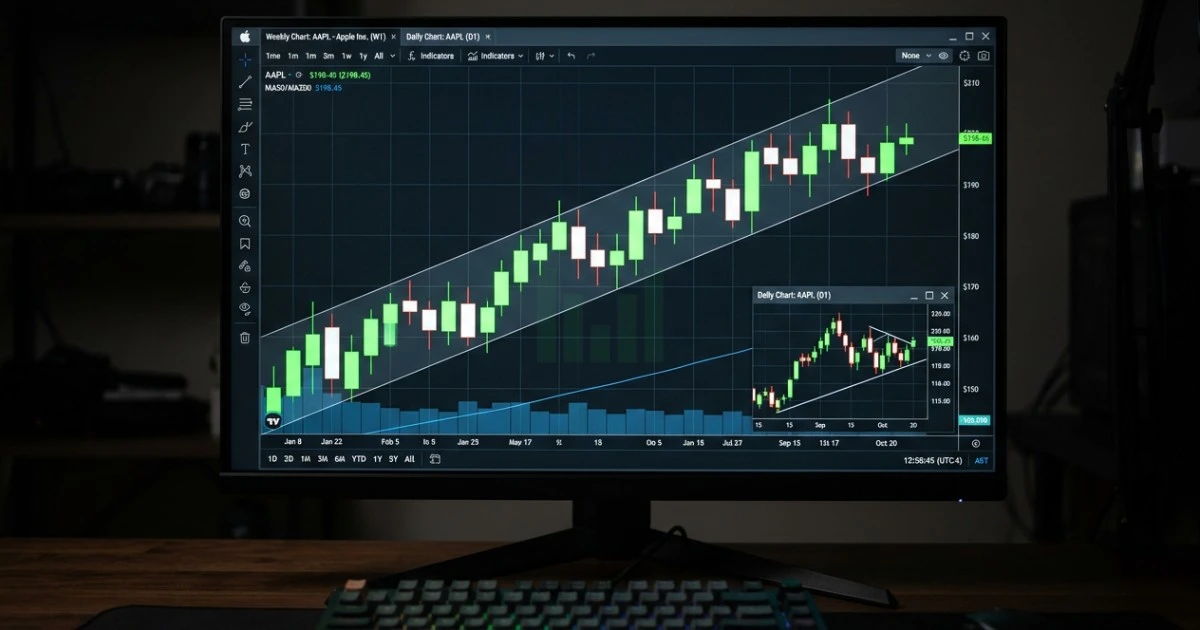
Start with the weekly chart. Not the daily, not the hourly, not the weekly. It removes short-term noise and shows the actual direction a stock has been moving over weeks and months. A consistent staircase pattern upward is an uptrend. Stair-stepping downward is a downtrend. Everything in between is consolidation, and consolidation is where traders get chopped up.
Once the weekly trend is confirmed, drop to the daily chart to time your entry. The weekly tells you where. The daily tells you when. Simple framework. Rarely practiced by the traders who need it most.
Trading Against the Trend Has a Price. Most Traders Pay It Twice.
The first payment is the losing trade, the position taken against the trend that reverses exactly as the broader direction predicted. The second payment is the recovery trade placed with less patience, less structure, and more urgency than the original.
Counter-trend trading doesn't just lose money on individual trades. It creates a compounding cycle of losses. The stock was always going to continue in its original direction. Every minute spent against the trend is a minute the trend is working against you and the trend has far more patience than any retail trader ever will.
Questions Traders Have Been Asking on the Internet
What is trend trading in swing trading? Trend trading means identifying the dominant direction a stock is moving over several weeks and only taking positions that align with it. Swing traders who follow trends position themselves with existing momentum, which statistically produces more consistent results than trading against it.
How do I know if a stock is in a real trend or just ranging? A real trend shows consistent price progression in one direction with controlled pullbacks respecting prior support or resistance. A ranging stock repeatedly returns to the same price levels with no directional bias. Trading a ranging stock as if it has a trend is one of the most common and costly mistakes in swing trading.
How long does a swing trading trend typically last? Swing trading trends can last several weeks to several months. Duration matters less than confirmation a trend is valid as long as its structure remains intact. The moment price fails to make a new higher high or breaks below a key higher low, the trend is signaling weakness.

Trade With the Trend. Trade With Swing Pilot.
The trend is the most powerful force in swing trading, telling you where momentum is flowing, where institutional money sits, and which side of the market gives your setup the highest probability. But identifying it is only half the equation. Acting on it with precision is where most traders fall short.
Swing Pilot bridges that gap. Every day before the market opens, Swing Pilot's AI processes thousands of stocks, identifies directional momentum, and delivers ranked setups built specifically around the trend. No guesswork. No counter-trend confusion. Just high-probability setups with the market's most powerful force behind them.
The trend is your only friend. Swing Pilot makes sure you're always trading with it.
Become a Beta Tester for Free
Smarter Swings. Stronger Returns.