




Bell IconBeta Testing Launching August 15th, 2026

Bell IconBeta Testing Launching
August 15th, 2026

Become a Beta Tester

Home / Blog

Risk-Reward Is the Only Metric That Matters

A 40% win rate can still be profitable. A 70% win rate can still blow an account. The difference isn't how often you win; it's how much you make when you do versus how much you lose when you don't. That ratio is everything. Explained ahead.

Michael Podsiadlo

7 min. read
Listen this blog
0:00 0:00

Your Win Rate Is Lying to You

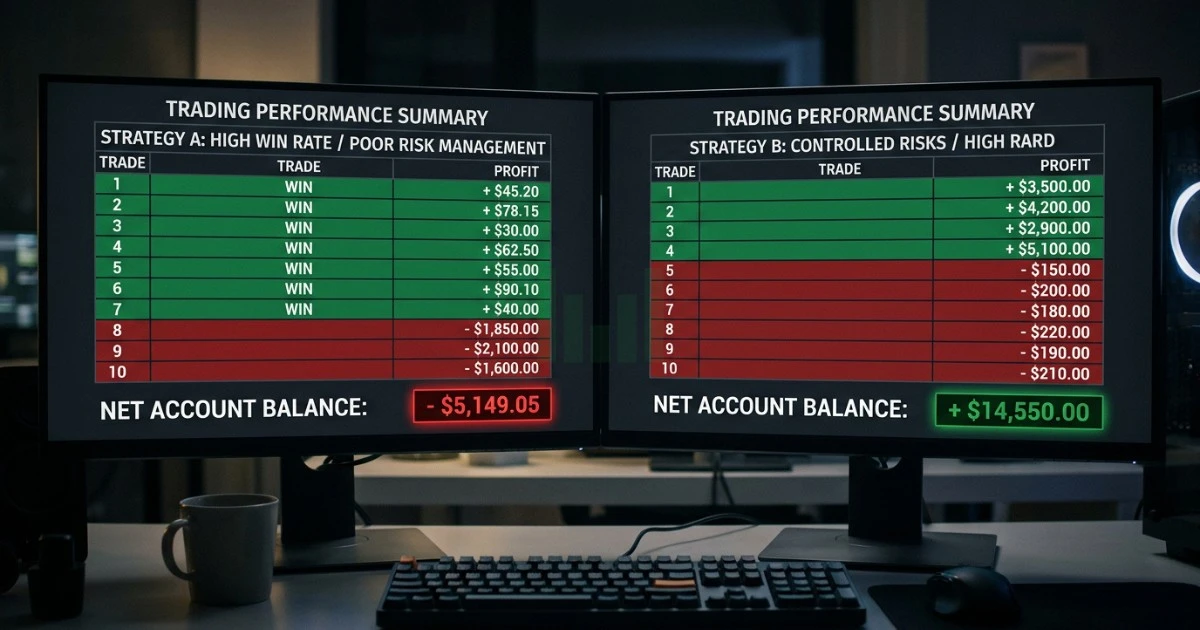
Ten traders. Same strategy. Same market. Different results. The one variable separating the profitable ones from the ones bleeding out slowly isn't talent, screen time, or even setup quality. It's what happens to the math when the trade closes.

A trader winning 7 out of 10 trades sounds impressive until you learn they make $100 on each winner and lose $400 on each loser. That's $700 in and $1,200 out. Net loss. Every single week. The win rate looked great. The account didn't survive it.

Flip it. A trader winning 4 out of 10 trades, risking $100 to make $300 every time. That's $1,200 in and $600 out. Net profit. Consistently. Without ever winning the majority of their trades.

Win rate is vanity. Risk-reward is reality.
What Risk-Reward Actually Means Before the Trade

Risk-reward isn't something you calculate after a trade closes. It's the first question you ask before one opens.

For every trade, one number needs to exist before entry: how much are you willing to lose if this trade goes wrong versus how much you stand to gain if it goes right. That's it. No formula. No complex model. Just two honest numbers decided before emotion enters the room.

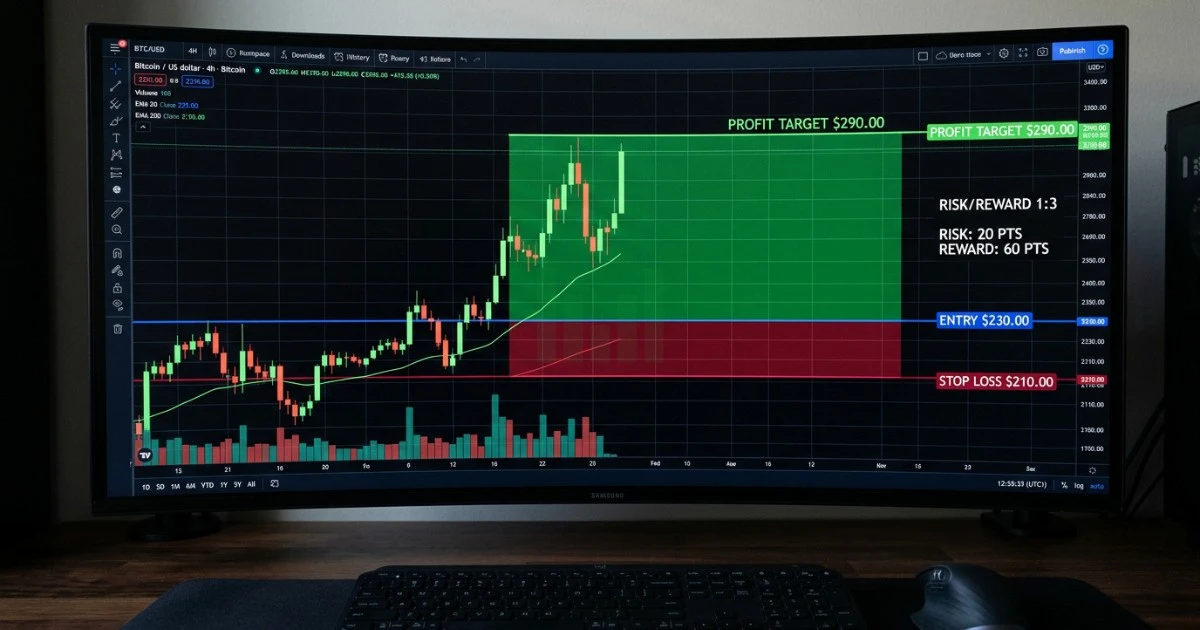
A 1:2 risk-reward means risking $1 to make $2. A 1:3 means risking $1 to make $3. The higher that ratio, the fewer trades you need to win to stay profitable. At 1:3, you only need to be right 25% of the time to break even. That's not a typo. That's math working in your favor instead of against you.

The problem is most traders never define these numbers before entering. They enter based on a feeling, set a stop loss loosely, and hope the target comes. That's not trading. That's wishing.
The One Habit That Changes Everything

Before every trade, not after, not during write down two numbers. Your maximum loss if the trade fails. Your target profit if it succeeds. Then ask one question: does this ratio justify the risk?

If the answer is no, don't trade it. If the answer is yes, execute without hesitation.

This single habit removes more bad trades from your session than any indicator, any screen, or any signal ever could. Because most bad trades don't fail because the setup was wrong. They fail because the math was never checked. The entry looked attractive, the momentum felt right, and the numbers were never part of the conversation.

Profitable swing traders don't just find good setups. They find setups where the math makes sense before the trade begins, and they walk away from every setup where it doesn't. That discipline is the entire edge.

Most Searched. Already Covered.

Does risk-reward ratio matter more than win rate in trading? Yes, the risk-reward ratio is a more reliable indicator of long-term profitability than the win rate alone. A trader with a strong risk-reward ratio can be profitable while winning fewer than half their trades, while a high win rate without favorable risk-reward consistently produces net losses over time.

What is a good risk-reward ratio for swing trading? Most experienced swing traders target a minimum risk-reward ratio of 1:2, meaning they risk $1 for every $2 of potential profit. Many aim for 1:3 or higher on their best setups. Any ratio below 1:1 makes consistent profitability mathematically difficult regardless of win rate.

How do I calculate risk-reward before entering a trade? Divide your potential profit by your potential loss. If your stop loss is $50 below your entry and your target is $150 above it, your risk-reward ratio is 1:3. This calculation should always happen before the trade is placed, never after entry when emotion is already involved.
How Swing Pilot Puts Risk-Reward to Work For You

Knowing what risk-reward means is one thing. Having a system that applies it to thousands of stocks before the market opens is another entirely.

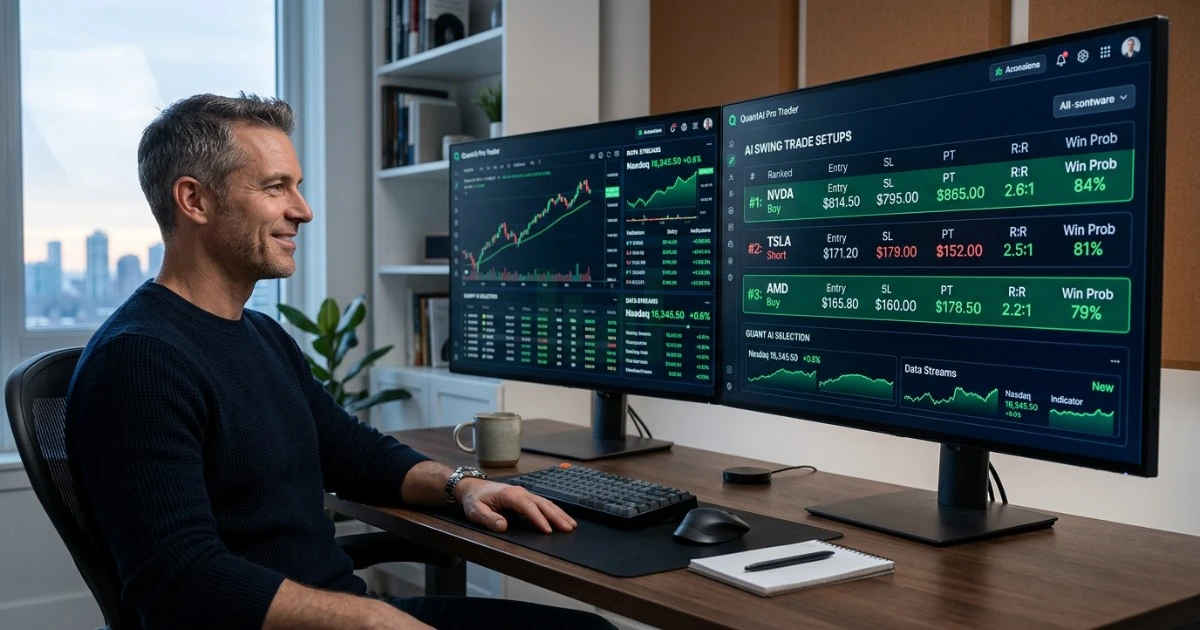
Swing Pilot's AI doesn't just identify setups it ranks them by probability and filters for the ones where the math actually makes sense. Every opportunity delivered to you has already passed through the kind of risk-reward logic most traders never apply manually. No setup that doesn't justify the risk makes the list. No trade that fails the ratio gets flagged.

You don't need to do the math on 6,000 stocks every morning. Swing Pilot already did. The setups in front of you aren't just technically valid they're mathematically worth taking.

Become a Beta Tester for Free

Smarter Swings. Stronger Returns.


What to read next

Home  >  Blog • 7 min. read

Risk-Reward Is the Only Metric That Matters

Team Logo
Michael Podsiadlo
Last Update Jul 16, 2026

A 40% win rate can still be profitable. A 70% win rate can still blow an account. The difference isn't how often you win; it's how much you make when you do versus how much you lose when you don't. That ratio is everything. Explained ahead.

Email Email Hover Facebook Facebook Hover Copy Link Copy Link Hover
Listen this blog
0:00 0:00

Your Win Rate Is Lying to You

Ten traders. Same strategy. Same market. Different results. The one variable separating the profitable ones from the ones bleeding out slowly isn't talent, screen time, or even setup quality. It's what happens to the math when the trade closes.

A trader winning 7 out of 10 trades sounds impressive until you learn they make $100 on each winner and lose $400 on each loser. That's $700 in and $1,200 out. Net loss. Every single week. The win rate looked great. The account didn't survive it.

Flip it. A trader winning 4 out of 10 trades, risking $100 to make $300 every time. That's $1,200 in and $600 out. Net profit. Consistently. Without ever winning the majority of their trades.

Win rate is vanity. Risk-reward is reality.

What Risk-Reward Actually Means Before the Trade

Risk-reward isn't something you calculate after a trade closes. It's the first question you ask before one opens.

For every trade, one number needs to exist before entry: how much are you willing to lose if this trade goes wrong versus how much you stand to gain if it goes right. That's it. No formula. No complex model. Just two honest numbers decided before emotion enters the room.

A 1:2 risk-reward means risking $1 to make $2. A 1:3 means risking $1 to make $3. The higher that ratio, the fewer trades you need to win to stay profitable. At 1:3, you only need to be right 25% of the time to break even. That's not a typo. That's math working in your favor instead of against you.

The problem is most traders never define these numbers before entering. They enter based on a feeling, set a stop loss loosely, and hope the target comes. That's not trading. That's wishing.

The One Habit That Changes Everything

Before every trade, not after, not during write down two numbers. Your maximum loss if the trade fails. Your target profit if it succeeds. Then ask one question: does this ratio justify the risk?

If the answer is no, don't trade it. If the answer is yes, execute without hesitation.

This single habit removes more bad trades from your session than any indicator, any screen, or any signal ever could. Because most bad trades don't fail because the setup was wrong. They fail because the math was never checked. The entry looked attractive, the momentum felt right, and the numbers were never part of the conversation.

Profitable swing traders don't just find good setups. They find setups where the math makes sense before the trade begins, and they walk away from every setup where it doesn't. That discipline is the entire edge.

Most Searched. Already Covered.

Does risk-reward ratio matter more than win rate in trading? Yes, the risk-reward ratio is a more reliable indicator of long-term profitability than the win rate alone. A trader with a strong risk-reward ratio can be profitable while winning fewer than half their trades, while a high win rate without favorable risk-reward consistently produces net losses over time.

What is a good risk-reward ratio for swing trading? Most experienced swing traders target a minimum risk-reward ratio of 1:2, meaning they risk $1 for every $2 of potential profit. Many aim for 1:3 or higher on their best setups. Any ratio below 1:1 makes consistent profitability mathematically difficult regardless of win rate.

How do I calculate risk-reward before entering a trade? Divide your potential profit by your potential loss. If your stop loss is $50 below your entry and your target is $150 above it, your risk-reward ratio is 1:3. This calculation should always happen before the trade is placed, never after entry when emotion is already involved.

How Swing Pilot Puts Risk-Reward to Work For You

Knowing what risk-reward means is one thing. Having a system that applies it to thousands of stocks before the market opens is another entirely.

Swing Pilot's AI doesn't just identify setups it ranks them by probability and filters for the ones where the math actually makes sense. Every opportunity delivered to you has already passed through the kind of risk-reward logic most traders never apply manually. No setup that doesn't justify the risk makes the list. No trade that fails the ratio gets flagged.

You don't need to do the math on 6,000 stocks every morning. Swing Pilot already did. The setups in front of you aren't just technically valid they're mathematically worth taking.

Become a Beta Tester for Free

Smarter Swings. Stronger Returns.


Time Is the Edge.

Use It.

Stop trading on emotion. Get AI-powered signals ranked by probability, delivered before the bell.

Become a Beta TesterFree!

What to read next
The Trend Is Your Only Friend in Trading. Use It.
Read More
The Market's Favorite Trader Is You Unprepared
Read More
Small Losses Aren’t The Turbulence. These 3 Trading Habits Are.
Read More