









The Weekend Creates a Market Nobody Saw Coming
Every weekend, the world keeps moving while the market sits still. Earnings drop after Friday's close. Geopolitical events develop. Economic data releases over Saturday and Sunday. Central banks make announcements nobody expected. By the time Monday's opening bell rings, the market isn't continuing from where Friday left off it's reacting to 48 hours of news that had nowhere to go.
That reaction shows up as a gap. Stocks open significantly higher or lower than they closed on Friday. For traders who read Friday's chart and built a setup around Friday's price, that gap immediately invalidates the plan. Entry levels are blown past. Stop losses are triggered before the trade even has a chance. The chart said one thing. The weekend said something else entirely.
Most traders walk into Monday thinking they're prepared. The market already moved without them.
Monday Morning Is the Market's Favorite Trap
Even when Monday doesn't gap, the first hour behaves differently than any other session. Volume is inconsistent. Institutional traders are still assessing the weekend's developments their algorithms are recalibrating, their desks are re-evaluating positions, and their orders are still forming. What's left in the first 30 to 60 minutes of Monday is a thin, emotionally-driven market dominated by retail traders who can't wait to start the week.
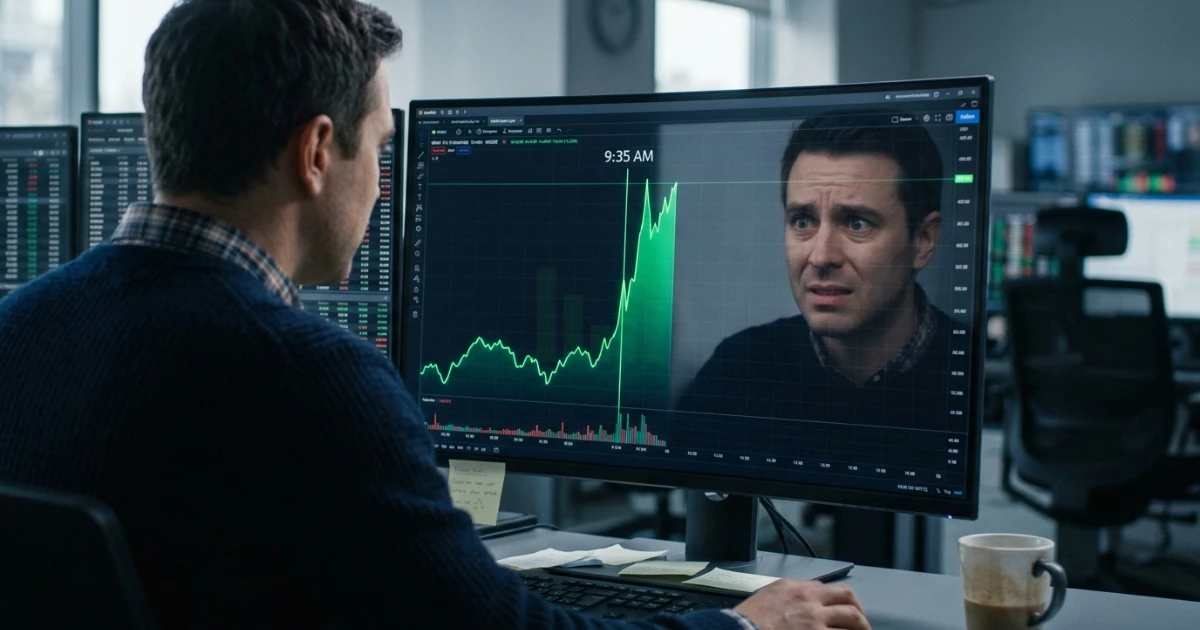
That combination creates the perfect environment for false moves. A stock spikes at open looks like a breakout. Everyone piles in. Institutional money hasn't confirmed it yet. The move reverses. The breakout was never real. It was Monday morning noise dressed up as a signal.
Those who acted on it didn't fail because their read was wrong. They failed because Monday's first hour is where analysis goes to die.
What Actually Drives Monday Losses
Three things compound on Mondays that don't exist with the same intensity on any other day.
The first is the weekend information gap nobody knows exactly how the market will interpret 48 hours of news until it opens and shows you. Predicting Monday's direction from Friday's chart is guesswork, not analysis.
The second is emotional urgency. After two days away from the market, traders want to be in something. That pull is indistinguishable from conviction in the moment but it produces trades with no real basis, entered too early, sized too aggressively, and exited too late when they don't work.
The third is volume vacuum. Without that institutional backing confirming the move, any direction Monday takes in its opening window is suspect. Low volume moves don't hold. They reverse. And those who chased them are left holding positions the rest of the week slowly works against.
Monday doesn't punish bad traders specifically. It punishes impatience and that pressure peaks every Monday at open.
What Smart Swing Traders Do on Mondays
They wait. Not out of fear out of understanding. The first rule of Monday trading for a disciplined swing trader is simple: let the market show you what the weekend meant before you decide what to do about it.
That means watching the open without touching it. Letting the gap fill or confirm. Waiting for the real move to emerge from the noise which rarely happens before 10:30AM and often not until Tuesday's session opens with more conviction behind it.
The best setups from Monday aren't entered until the market proves direction. They're identified on Monday and executed once the market has had time to settle and show its hand.
Patience on Monday isn't missed opportunity. It's capital protection the one habit that keeps profitable swing traders in the game when impulsive ones are already in damage control.
Most Searched. Already Covered.
Why do trades fail more often on Mondays? Monday trades fail more often because markets gap at open due to weekend news, volume is lower than average as muted institutional activity recalibrates, and traders enter positions driven by urgency rather than confirmed setups. The combination of unpredictable gaps, thin volume, and emotional decision-making makes Monday the highest-risk session of the trading week.
Should swing traders avoid trading on Mondays? Swing traders don't need to avoid Mondays entirely they need to avoid Monday's first hour. The opening 30 to 60 minutes are driven by weekend reaction and muted institutional participation, creating unreliable signals and short-lived moves. Waiting for clear signals to emerge before acting meaningfully improves the quality of Monday setups.
What is a weekend gap in trading? A weekend gap occurs when a stock or market opens significantly higher or lower on Monday than it closed on Friday, driven by news, earnings, or events that developed over the weekend while markets were closed. Weekend gaps frequently invalidate setups built on Friday's price action, triggering stop losses and blowing past entry levels before a trade has the opportunity to develop.
Monday Has a Pattern. Swing Pilot Already Mapped It. Every Monday, thousands of traders place the same rushed trades, get caught by the same volatility traps, and spend days trying to dig out. The pattern doesn't change because the behavior doesn't change and behavior doesn't change without a system that accounts for it.
How Swing Pilot Help You
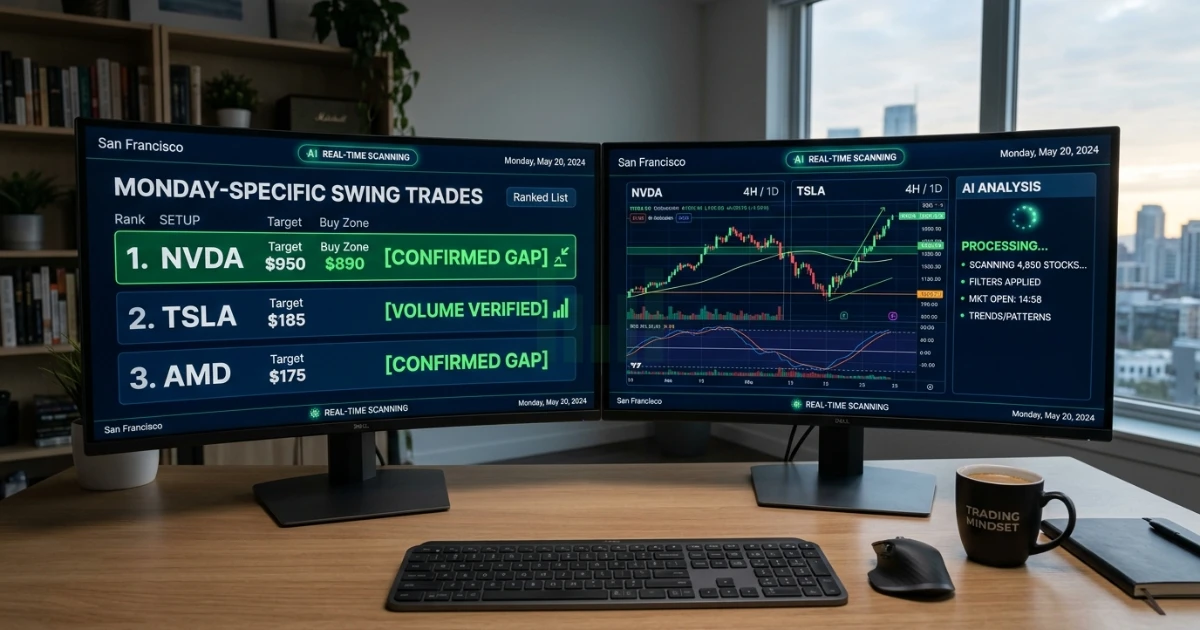
Swing Pilot's AI doesn't just identify setups. It identifies which setups are worth acting on and when processing weekend developments, gap behavior, and early volume patterns to deliver ranked opportunities that have cleared Monday's noise. No chasing the open. No reacting to gaps that haven't confirmed. Just high-probability setups filtered through the kind of intelligence that takes the most dangerous day of the trading week and turns it into an edge instead of a liability.
By the time most traders are trying to dig out from a bad Monday trade, Swing Pilot traders already know if Monday is worth trading at all.
Become a Beta Tester for Free
Smarter Swings. Stronger Returns.