



Home / Blog

The Fake Move That Traps Traders Every Week

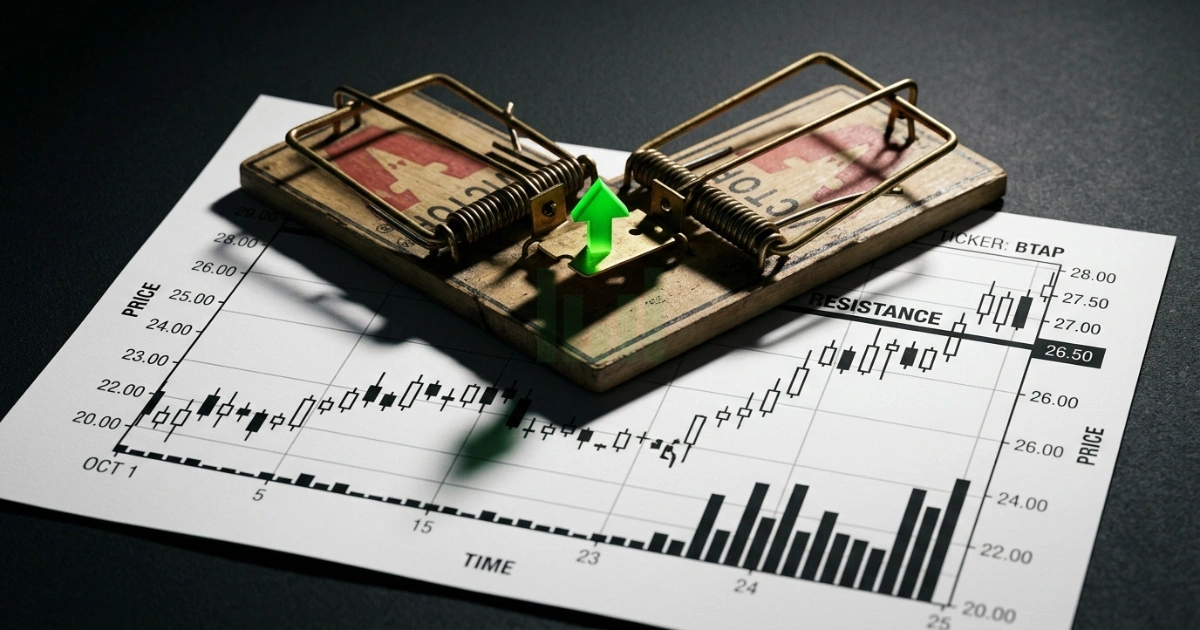
Every week, the same thing happens. A stock breaks out. Volume spikes. Traders pile in. Then it reverses hard. The breakout was never real. The move was manufactured, the signal was noise, and the traders who acted on it are now managing a loss instead of a profit. This happens every single week. Here’s exactly why and how to never be that trader again.

Michael Podsiadlo

9 min. read
Listen this blog
0:00 0:00

What a Fake Move Actually Is

A fake move called a false breakout or a fakeout happens when price briefly breaks through a key technical level, attracts traders expecting a continuation, and then reverses sharply back through that level leaving everyone who entered trapped on the wrong side.

It doesn’t happen by accident. Markets are driven by institutional orders. When price approaches a well-known level a resistance zone, a prior high, a consolidation ceiling institutions know retail traders have buy orders clustered just above it. Triggering those orders creates a brief burst of buying momentum. Then institutions sell into that momentum. Price reverses. Retail traders are left holding a position that moved the wrong way almost immediately after entry.

The fakeout isn’t a market anomaly. It’s a recurring pattern that exploits predictable retail trader behavior every single week.

Why Traders Fall For It Every Time

Three behavioral patterns make retail traders the perfect target for fake moves.

The first is breakout urgency. When price approaches a key level, the anticipation builds. Most traders enter the moment price crosses the level exactly where the trap is set. The entry feels right because the chart is doing what charts are supposed to do. What it’s actually doing is collecting impatient buyers.

The second is volume misreading. A spike in volume at a breakout feels like confirmation. In a real breakout, institutional money is driving the move. In a fakeout, that volume spike is institutions selling into retail buy orders. High volume at a breakout isn’t always confirmation. It’s sometimes the exit.

The third is recency bias. The last real breakout the trader caught was clean it ran and delivered. That memory makes the next fakeout feel identical until it isn’t. Pattern recognition becomes pattern assumption, and assumption is exactly what the market feeds on.

How to Tell the Real Move From the Fake One

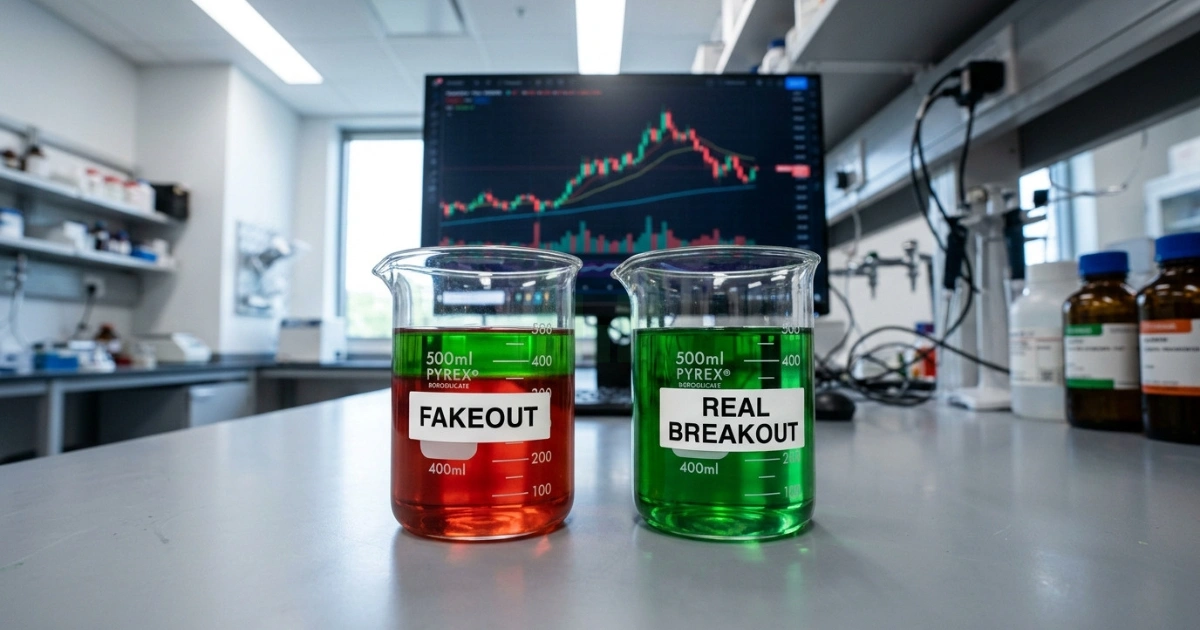
The difference between a real breakout and a fakeout is rarely visible in the moment. But there are filters that dramatically reduce the probability of being caught.


Wait for the close. A breakout that closes above the level on a daily candle carries significantly more weight than an intraday spike above it. Most fakeouts don’t survive the daily close. Most real breakouts do. One candle of patience eliminates a significant percentage of false entries.


Check the broader trend. A breakout in the direction of the established trend has

institutional momentum behind it. A breakout against the trend is fighting the dominant force in the market. Trend-aligned breakouts fail far less often.


Watch what follows the spike. Real breakouts hold above the broken level and use it as new support. Fakeouts collapse back through it immediately. If price spikes above resistance and immediately returns below it that’s not a breakout. That’s a trap that already closed.
Most Searched. Already Covered.

What is a false breakout in trading? A false breakout occurs when price briefly moves through a key technical level support, resistance, or a prior high or low attracts traders expecting continuation, and then reverses sharply back through that level. False breakouts are common near well-known technical levels because institutional traders are aware of where retail orders are clustered and can use that liquidity to execute their own positions.


How do I avoid false breakouts in swing trading? The most effective way to avoid false breakouts is to wait for a confirmed daily close above the breakout level rather than entering on the intraday spike. Additional filters include checking that the breakout aligns with the established trend direction, verifying that volume reflects genuine institutional participation rather than a brief retail-driven spike, and waiting for the broken level to hold as new support before committing to a full position.


Why do breakouts fail so often for retail traders? Breakouts fail for retail traders because they typically enter at the exact moment a key technical level is breached which is the highest-risk entry point. Institutions are aware of where buy orders cluster above resistance and can trigger those orders before distributing their own positions into the resulting momentum. Retail traders who enter immediately on a breakout without waiting for confirmation are entering precisely where the trap is set.

Swing Pilot Filters the Fakeouts Before They Reach You

The hardest part of avoiding fake moves isn’t knowing they exist. Every trader who has been trapped by one knows exactly what happened afterward. The hard part is having a system that filters them out before they reach your decision-making process.

Swing Pilot’s AI doesn’t just identify breakouts. It validates them cross-referencing trend alignment, volume patterns, and historical behavior at key levels to separate genuine momentum from manufactured moves. The setups that reach you have already survived the filters most traders never apply manually.

No fakeout that fails the criteria makes the ranked list. No move that looks right but doesn’t confirm makes the cut. By the time a setup reaches you through Swing Pilot, the fake moves have already been removed and what’s left is worth acting on.

The market will keep setting the same trap every week. Swing Pilot makes sure you’re not in it.

Become a Beta Tester for Free

Smarter Swings. Stronger Returns.


What to read next

Home  >  Blog • 9 min. read

The Fake Move That Traps Traders Every Week

Team Logo
Michael Podsiadlo
Last Update Oct 16, 2026

Every week, the same thing happens. A stock breaks out. Volume spikes. Traders pile in. Then it reverses hard. The breakout was never real. The move was manufactured, the signal was noise, and the traders who acted on it are now managing a loss instead of a profit. This happens every single week. Here’s exactly why and how to never be that trader again.

Email Email Hover Facebook Facebook Hover Copy Link Copy Link Hover
Listen this blog
0:00 0:00

What a Fake Move Actually Is

A fake move called a false breakout or a fakeout happens when price briefly breaks through a key technical level, attracts traders expecting a continuation, and then reverses sharply back through that level leaving everyone who entered trapped on the wrong side.

It doesn’t happen by accident. Markets are driven by institutional orders. When price approaches a well-known level a resistance zone, a prior high, a consolidation ceiling institutions know retail traders have buy orders clustered just above it. Triggering those orders creates a brief burst of buying momentum. Then institutions sell into that momentum. Price reverses. Retail traders are left holding a position that moved the wrong way almost immediately after entry.

The fakeout isn’t a market anomaly. It’s a recurring pattern that exploits predictable retail trader behavior every single week.

Why Traders Fall For It Every Time

Three behavioral patterns make retail traders the perfect target for fake moves.

The first is breakout urgency. When price approaches a key level, the anticipation builds. Most traders enter the moment price crosses the level exactly where the trap is set. The entry feels right because the chart is doing what charts are supposed to do. What it’s actually doing is collecting impatient buyers.

The second is volume misreading. A spike in volume at a breakout feels like confirmation. In a real breakout, institutional money is driving the move. In a fakeout, that volume spike is institutions selling into retail buy orders. High volume at a breakout isn’t always confirmation. It’s sometimes the exit.

The third is recency bias. The last real breakout the trader caught was clean it ran and delivered. That memory makes the next fakeout feel identical until it isn’t. Pattern recognition becomes pattern assumption, and assumption is exactly what the market feeds on.

How to Tell the Real Move From the Fake One

The difference between a real breakout and a fakeout is rarely visible in the moment. But there are filters that dramatically reduce the probability of being caught.


Wait for the close. A breakout that closes above the level on a daily candle carries significantly more weight than an intraday spike above it. Most fakeouts don’t survive the daily close. Most real breakouts do. One candle of patience eliminates a significant percentage of false entries.


Check the broader trend. A breakout in the direction of the established trend has

institutional momentum behind it. A breakout against the trend is fighting the dominant force in the market. Trend-aligned breakouts fail far less often.


Watch what follows the spike. Real breakouts hold above the broken level and use it as new support. Fakeouts collapse back through it immediately. If price spikes above resistance and immediately returns below it that’s not a breakout. That’s a trap that already closed.

Most Searched. Already Covered.

What is a false breakout in trading? A false breakout occurs when price briefly moves through a key technical level support, resistance, or a prior high or low attracts traders expecting continuation, and then reverses sharply back through that level. False breakouts are common near well-known technical levels because institutional traders are aware of where retail orders are clustered and can use that liquidity to execute their own positions.


How do I avoid false breakouts in swing trading? The most effective way to avoid false breakouts is to wait for a confirmed daily close above the breakout level rather than entering on the intraday spike. Additional filters include checking that the breakout aligns with the established trend direction, verifying that volume reflects genuine institutional participation rather than a brief retail-driven spike, and waiting for the broken level to hold as new support before committing to a full position.


Why do breakouts fail so often for retail traders? Breakouts fail for retail traders because they typically enter at the exact moment a key technical level is breached which is the highest-risk entry point. Institutions are aware of where buy orders cluster above resistance and can trigger those orders before distributing their own positions into the resulting momentum. Retail traders who enter immediately on a breakout without waiting for confirmation are entering precisely where the trap is set.

Swing Pilot Filters the Fakeouts Before They Reach You

The hardest part of avoiding fake moves isn’t knowing they exist. Every trader who has been trapped by one knows exactly what happened afterward. The hard part is having a system that filters them out before they reach your decision-making process.

Swing Pilot’s AI doesn’t just identify breakouts. It validates them cross-referencing trend alignment, volume patterns, and historical behavior at key levels to separate genuine momentum from manufactured moves. The setups that reach you have already survived the filters most traders never apply manually.

No fakeout that fails the criteria makes the ranked list. No move that looks right but doesn’t confirm makes the cut. By the time a setup reaches you through Swing Pilot, the fake moves have already been removed and what’s left is worth acting on.

The market will keep setting the same trap every week. Swing Pilot makes sure you’re not in it.

Become a Beta Tester for Free

Smarter Swings. Stronger Returns.


Time Is the Edge.

Use It.

Stop trading on emotion. Get AI-powered signals ranked by probability, delivered before the bell.

Become a Beta TesterFree!

What to read next
How Geopolitical Events Move Your Swing Trades
Read More
Why Monday Trades Lose More Than Any Other Day
Read More
Risk-Reward Is the Only Metric That Matters
Read More